On-air, podcasts, vodcasts: Radio’s omnichannel presence
When I received my first on-air opportunity on community radio around 2009, we used CDs as part of the play-out system, if you missed the on-air moment. You might find it somewhere online; social media as we know it was non-existent and we could broadcast exclusive content, and drive the social narrative forward.
Radio personalities in those days had a level of mystique, which added to their celebrity factor because the voice and limited media outlets where they conducted interviews were the main access points to their personality.
Media personalities could share their perspectives through interviews on mainstream media, which were filtered by newsroom editors and producers to drive listenership or viewers.
I remember meeting a listener for the first time during those early radio days, who was shocked that I was short, shy and so young while she was in her 40s and was within my core target audience at the time.
This culture, in this period, is gone; radio talent has to be on social these days and be active enough to build a strong, influential voice with a solid, engaged following.
Around 2015, radio stations, especially commercial radio, found a way to leverage social media, to drive radio station brand affinity and most importantly, to draw listeners back to listen live on air – which is important to grow and sustain on air audience figures, which is the core business.
This took many shapes, from featuring polls to hear the results on air, moving beyond SMSs to reading comments on social media, and sharing WhatsApp voice notes, which helped in many ways to keep listener inputs succinct etc. and then repurposing the on air content to live longer on social media, with a loop effect always to direct listeners back to listening live.
Cliff Central’s impact
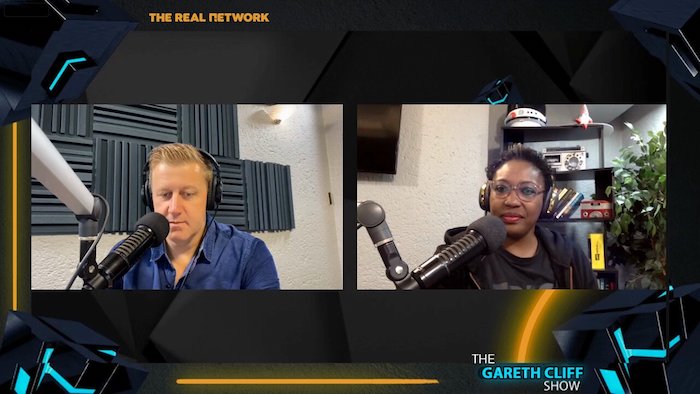
The latter tactics are still being employed, of course. This formula worked for a while, until around the period Gareth Cliff delivered his ominous warning – that seemed alarmist at the time – that global media consumption trends were shifting audiences more towards podcasts or vodcasts, and this would be a major challenge to terrestrial radio.
He repeatedly uttered these sentiments when he was probed on why he left 5FM and why he did not seek other terrestrial radio opportunities. Of course his new online radio station, Cliff Central (now rebranded to The Real Network), was initially similar to the breakfast show offering he hosted at the SABC.
That, over time, proved not to be the winning dominant style of ‘vodcasts’ (visual podcasts) but boy, was he correct.
The style is spearheaded by the likes of Mac G, who also faced a traditional radio exit, not by choice, but has brought incredible influence in how vodcasts are approached, particularly in the South African radio landscape.
Compelling content
More than just needing an influential and engaged social media presence from talent, radio stations also face the challenge of replication of content already consumed – particularly in the context of interviews, where the guest repeats what was probably done better on a vodcast before, while still facing the radio clock with its time constraints of other service/entertainment elements like music, sport bulletins etc that vodcasts don’t face. Then there are the obvious constraints from the BCCSA (he Broadcast Complaints Commission of South Africa).
Recall is one of the cardinal pillars to building audiences so they come back more often and also to develop affinity. I can recall several Mac Gs vodcast episode moments that trended on social media – like the nudist individuals who interviewed with no clothes on, which also shows the shifting values of society today.
Of course, shock radio was there back in the day, and it’s not the only form of creating recall but 15 minutes max radio interview compared to an entertaining/deeply authentic one hour conversation on a vodcast, can be tough to beat but not impossible.
Outdated values
The BCCSA is meant to protect audiences from consuming problematic content, explicit language etc. However, how do you beat Lillian Dube sharing her most intimate details on sexuality that she shared recently on Dineo Ranaka’s vodcast for example?
Although, vodcasts are winning audiences on socials, time spent ‘watching’ or ‘listening’ is not as clear to me as radio statistics are for example. But of course, digital software could provide this information.
My strong suspicion is that Tik ok, bite sized audience amplification consumption approach, is what has injected the vodcast revolution with a massive blow up online.
Anyone can be a content creator today, and so those barriers to entry that radio had to be more exclusive bring another challenge in our new media landscape feeding from Gen Z’s mass echo chamber content-sharing culture – where their lived experience is shared virtually with feedback experience from their peers. Oversharing, for example, which may apply more to previous generations, seems like a long-gone outdated value.
The challenge
Herein lies the challenge for radio in this multi-platform content creation and consumption era, where audiences are being pulled in so many different directions with a plethora of options to listen how and when they want to, as opposed to appointment listening.
Anele Mdoda’s Breakfast Show on 947 is objectively handling these changes well and is a fantastic case study on approaches radio stations could take in South Africa to navigate these highly volatile times.
Anele is one of the few radio greats from the good old days, who brings an arsenal of experience, a following and name recognition. 947 has taken a similar approach to the one they had with Jeremy Mansfield (The Rude Awakening Breakfast show before 94.7 Highveld Stereo radio station rebrand), where a team of voices with different perspectives, but aligned to key target demographics, are assembled to support Anele as the hero of the show – and they do this well.
Leveraging social media presence
Anele’s ability to leverage her social media presence and influence is one of the reasons for her success. Her recent posts on her travels to Kenya, where she shared what came across as real-time authentic struggles with the airline, which led her to missing her radio show, provided a compelling narrative that drove listeners right back to listening to the ‘full story’ live on air when she returned.
She gets this right on so many occasions, whether it’s her view on potholes in Joburg –which could be top of mind for her audience – or asking her followers to explain the meaning of a song she discovered, or her daily moments with her son.
It all feels organic, and one can tell that sometimes it’s just to live on social to build affinity and at times she builds these tantalising throw forwards as well as mini-story arcs to drive audiences to her radio show. It also matters how we treat interviews in particular today on air, and here too, Anele’s treatment of radio interviews shows incredible interest in pushing against the grain in a way that rivals vodcast content.
Radio needs to build solid talent once more and not just source talent from influencers only, which seems to be a trend.
Technical on air delivery skills are key, because once the listener chooses to listen live on air, techniques to keep listeners engaged from the presenter and the way the clock is set, become pivotal.
Hone technical skills
Andy Maqondwana on Kaya FM is the perfect example of honed technical skills for on air delivery – she tops and tails her links well, and plans her sequences of content – something that influencers are not necessarily trained to do.
Radio needs to continue to create community, an element that remains fractured in the vodcast/podcast online space. Community is created by proper programming formatting that is attuned to listeners’ needs and a marketing arsenal that fits right into the listener’s lifestyle.
Finally, vodcasts have major challenges themselves, with this plethora of similar style of production diluting a great deal of their impact, but there is no doubt this evolution has been an affront to radio and forces it to respond in how it will produce and package its content to include more visual elements, a trend that is beginning to blossom.
Kabelo Mekoa is a dynamic marketing creative with a radio programming and television content background. He has over 10 years of experience in the media sector, largely as a producer and programme manager. He holds an Advanced Radio Certificate from Wits University. He holds a BA degree in Philosophy, Politics and Economics. He is currently the development and creative associate at Media Beat – a boutique marketing agency based in Cape Town and Johannesburg, which specialises in integrated marketing campaigns in relation to radio, television and digital channels, as well as a host of other offerings.
CUT celebrates Women’s Month [2021 August 20] https://www.cut.ac.za/news/cut-celebrates-womens-month
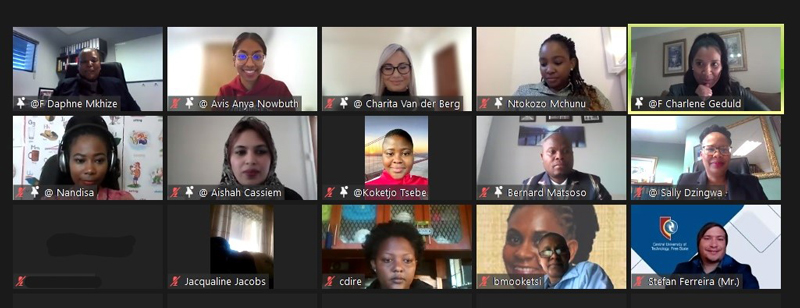
The Central University of Technology celebrated women’s month with a star-studded virtual event held on 19 August 2021, under the theme ‘Gender Equality’. The panel included winners of the 2021 Mail and Guardian 200 Young South Africans as well one of CUT’s youngest women in a management position.
The panel included Dr Anya Nowbuth, Medical Doctor at the Lusaka Apex Medical University in Zambia; Agripreneur and Director of Maliyeza, Ms Nandisa Mpanza; Managing Director of Media Beat, Ms Charita van der Berg; lecturer at the Department of Psychology at Unisa, Dr Koketso Tsebe; investigative journalist, Ms Aishah Cassiem and senior town planner, Ms Ntokozo Mchunu from the CUT Bloemfontein campus.
Facilitated by CUT Clinical Science Lecturer, Ms Charlene Geduld and Accounting Lecturer, Ms Daphne Mkhize the theme was centered around The Year of Charlotte Maxeke: Generation Equality: Realizing Women’s Rights for an Equal Future, commemorating the iconic South African women who marched to the Union Building in 1956, while embracing the changing narrative that young women are getting closer to achieving gender equality.
As a young investigative journalist, Aishah Cassiem addressed matters such as whether the appointment of women as ministers in parliament accurately reflects representation of women in our society. “I strongly believe that women have the capacity to lead. Gender equality is imperative to achieve the national vision that is promoting the advancement of women, but we still have a long way to go when it comes to women in power. As a society, we love the idea of women being in power, but we are still living in a society where men don’t like to be ruled by women. I truly believe that women occupying positions such as CEOs and Ministers are shattering stereos types. There will always be a struggle because we live in a society where some men differ,” said Cassiem.
Commenting on mental health of women in sports, Dr Koketso Tsebe, lecturer at the Department of Psychology at Unisa, said that more work that needs to be done. “Historically, South African sport has been solely focused on the physical aspects. I always say that sport has always been more psychological rather than physical without being bias. For one to be able to compete successfully in it takes great and strong and stable psychological variables such as motivation, being consistent. The role of psychology in this instance doesn’t not mean that it only comes in when there are challenges, it should be integrated as it can also enhance performance,” said Dr Tsebe.
Charita van der Berg, Managing Director of Media Beat added that young women are now the torch bearers of the struggle for equality. “We are the future, it’s up to us to shape the future of women in the way that it was shaped for us when the women marched to parliament. They started this process for us but it’s up to us to take it to the next step, it’s about being steadfast, believing in what you want and being relentless. We have to make sure that the girls who are the future have no limits to what they can do,” said van der Berg.
In closing, Dr Anya Nowbuth, Medical Doctor at the Lusaka Apex Medical University in Zambia talked about what can men do to help women equality. “Embracing what is called feminine characteristics, being sensitive, tender or gentle, which are sometimes frowned upon, man up or don’t cry. Taking these kinds of feminine characteristics and celebrate, value and encourage them. And to teach young boys and girls to value these characteristics, and together as a society we can manifest all the things discussed today and it will be a more meaningful and fruitful,” concluded Dr Nowbuth.
Watch the virtual women’s day celebration
[2020 September 18]
Startup Grind. “Startup Grind Hosts Charita van der Berg Founder & MD Of Media Beat” [2020 September 17] https://radiotoday.co.uk/2020/08/uk-radio-agency-expands-to-international-markets/
Charita van der Berg is a broadcast media specialist. Through her company Media Beat, she applies her extensive experience to help radio stations across Southern Africa and, through her partnership, the UK and Australia to increase their advertising revenue through innovative solutions. Currently she connects content creators, SEO and the broadcasting world. As DJ Chaz, she is a recognized DJ and music producer.
Join us in a tell-it-all fireside chat with Charita as she takes us on her journey into building a successful media company!!
RSVP For Our Fireside Chat With Charita van der Berg Founder & MD Of Media Beat. A Link to event will be emailed to you! GET READY TO BE INSPIRED!!!!!
Media Beat. “New Horizons for radio revenue agency” [2020 August 31] https://www.bizcommunity.com/Article/196/59/207775.html
Media Beat is a specialised agency that was born out of a sincere passion for community radio. With extensive experience in radio, they are divergent in their thinking, while making sure their clients get the best possible service and the most out of their investment.
Founder, radio specialist Charita van der Berg from says: “I am thrilled about our partnership with Love Radio and that we are able to bring this unique service to Southern Africa. Media Beat was interested in finding alternative revenue streams for community radio stations and with this partnership we can create those opportunities for clients.”
Love Radio delivers online revenues exclusively for the radio industry. Using content writing services on behalf of clients, Love Radio have been working with almost 100 local stations in the UK since March.
Ben Tuffin, director of opportunities at the Hampshire-based agency says: “We’re excited to announce a partnership with Media Beat in Southern Africa where we will deliver online revenues from digital clients across their growing portfolio of stations. We started as a way to increase revenues for community stations in the UK and it hasn’t taken long for us to explore this as a global opportunity for our clients.”
An Adelaide office covering Australia and New Zealand is likely to open later this year. The Australasian operation is planned to work on behalf of around 400 stations.
Radio stations in Southern Africa interested in finding out more about Media Beat’s digital revenue solution should email az.oc.taebaidem@nimda or visit www.mediabeat.co.za
Radio Today. “UK radio agency expands to international markets” [2020 August 30] https://radiotoday.co.uk/2020/08/uk-radio-agency-expands-to-international-markets/
Radio sales agency Love Radio is expanding in more markets around the globe.
Love Radio delivers online revenues exclusively for the radio industry using content writing services on behalf of clients.
The company has been working with almost 100 local stations in the UK since March and is about to launch its service in Southern Africa and Australia.
Ben Tuffin, director of opportunities at the Hampshire-based agency says: “We’re excited to announce a partnership with Media Beat in Southern Africa where we will deliver online revenues from digital clients across their growing portfolio of stations.
“We started as a way to increase revenues for community stations in the UK and it hasn’t taken long for us to explore this as a global opportunity for our clients.”
Love Radio is based at community station Andover Radio and offers services from a sales and management team that have experience of the operation of small-scale radio stations.
Radio specialist Charita van der Berg from Media Beat says: “I am thrilled that we can bring this unique service to Southern Africa. Media Beat was interested in finding alternative revenue streams for community radio stations and with this partnership we can create those opportunities for clients.”
Media Beat is a specialised agency that was born out of a sincere passion for community radio. With extensive experience in radio, they are divergent in their thinking, while making sure their clients get the best possible service and the most out of their investment.
An Adelaide office covering Australia and New Zealand is likely to open later this year. The Australasian operation is planned to work on behalf of around 400 stations.
Radio stations in the UK interested in finding out more about Love Radio’s digital revenue solution can visit loveradio.co, while stations in Southern Africa should can Media Beat at mediabeat.co.za.